
 The Wallet Shoppe

Exactly what is “vegan leather”? It sounds like a contradiction in terms, and of course, in real life it is. It’s largely a marketing term that sounds better than “plastic”, or “a weird substance we made out of mushrooms”. Nevertheless, it’s more popular than ever. So let’s dig into what it is, what PU leather is (and whether it’s vegan), and whether you should consider either for your next wallet.
What is Vegan Leather?
Simply put, vegan leather is a manufactured material designed to look (more or less) like real leather, without using animal hide. There are two main reasons people choose it:
- Cost. Real leather is expensive. There will always be a market for things that look like the real thing but don’t require a mortgage.
- Ethics. Real leather is an animal by-product. However humanely the animal was raised, and even if the hide is a side effect of the food industry, that’s not an option for some people.
Why Not Choose a Different Material?
There are plenty of other wallet materials these days: metal, carbon fiber, wood… the options are endless. So why choose a faux leather?
It’s simple really. We’re part of nature ourselves, so we’re hard-wired to appreciate the look and feel of natural materials. Think about the Impossible Burger: they obviously concluded that the best way to get people to eat non-meat food was to … make it look and taste as much like meat as possible.
What Is PU Leather?
Until a few years ago, there were two main options: PU leather and PVC.
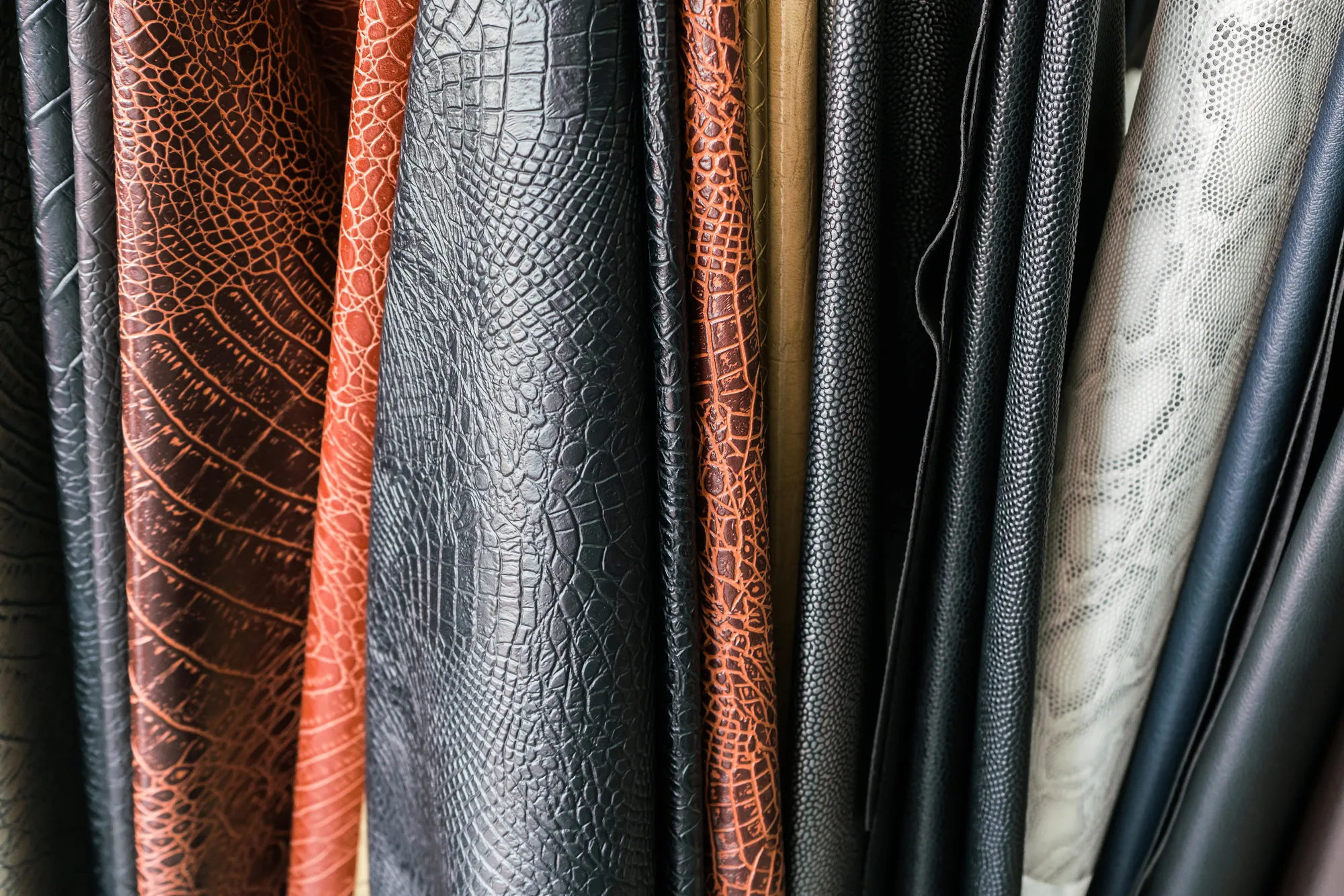
PU stands for polyurethane. “PU leather” is a leather-like material with a polyurethane surface over a backing, but the term gets used loosely. Typically, that backing is a fabric like cotton or polyester, which makes it animal-free. But sometimes the backing is the fibrous leftover layer from real cowhide (often sold as “bonded” or “bicast” leather), coated in polyurethane to make it look smooth and glossy.
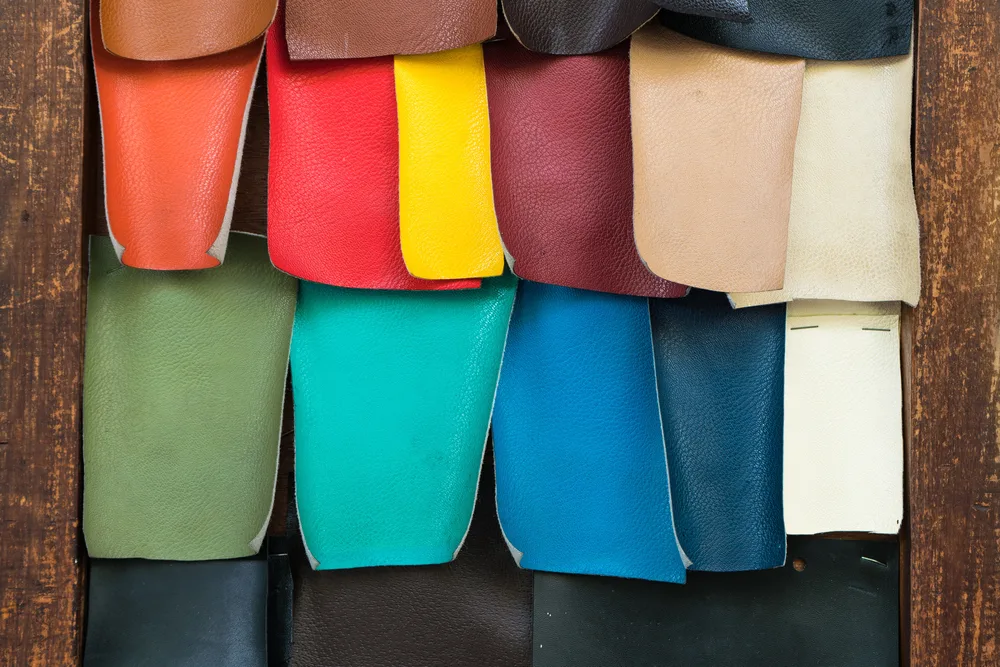
PVC (polyvinyl chloride) is the other one, often just called vinyl. These days you mostly hear that word from hipsters buying records, not people buying leather goods, as it developed a reputation for being cheap and nasty stuff. Both often get called “pleather” (plastic leather).
Is PU Leather Vegan?
PU leather does NOT necessarily mean vegan! It just means it could be.
If the polyurethane is on a fabric backing, it’s animal-free. If it’s on a leftover-cowhide backing, it decidedly isn’t. And a seller calling something “vegan” isn’t the same as independent certification; schemes like the Vegan Society’s trademark exist if that matters to you. So if it matters, look for an explicit statement that the whole product (lining and trim included) is animal-free, and ask if you’re not sure.
PU Leather vs. Real Leather
PU leather is usually much cheaper than real leather, and the good stuff can look very similar. It’s a great way to try out a style (a bold color, say, or a trendy bag) without making a major financial commitment.
But there’s a reason it’s cheaper. In our experience, real leather generally lasts longer and ages better. PU tends to crack or peel, especially at folds and edges, while good leather softens and develops a patina. Real leather breathes, too. And once a PU coating starts peeling, no amount of leather conditioner will put it back together.
How can you tell the difference? Start with the label and the maker’s material description. Real leather usually has small natural marks and an uneven grain, while PU tends to look perfectly uniform, but embossing can fool you either way. (Please don’t test a store’s stock by dripping water on it!)
Enter the Green Faux Leathers
In the last few years, responding to a growing appetite for more natural, ethically sourced goods, a few companies have started making leather-like materials from all sorts of things. Most take a similar approach to PU and PVC: an industrial process makes a material with the right texture and feel, which is then bonded to a fabric backing for strength. Some examples:
- Cork leather. Made from the bark of the cork oak, which can be harvested without harming the tree.
- Pineapple leather. Made from the long fibers in pineapple leaves. Piñatex is the best-known example.
- Apple leather. Made from the leftover skins and cores from juice and jam making, mixed with polyurethane.
- Cactus leather. Made from mature cactus leaves, harvested without killing the plant.
- Mushroom leather. Made from mycelium, the root-like structure of mushrooms.
And more are being developed all the time.

Pineapple. Leather. Get it?
One thing to know: most of these still use a polyurethane binder or coating, so “plant-based” doesn’t always mean plastic-free.
Is Faux Leather Actually Good For The Environment?
Well now, that’s an interesting question. A lot of people assume that vegan = more natural = better for the environment. Marketing departments are probably a big part of that, since it’s a great selling point. It’s not always true, though.
The chemicals used to make PVC, for instance, aren’t great for the people making it or for the environment, and even some of the natural-sounding alternatives can do more harm than good depending on how they’re grown and made. “Animal-free” answers one question. It’s worth looking at a company’s sustainability practices, not just the materials it uses.
Buyers Guide - Should You Buy A Vegan Leather Wallet?
This is, as always, a very personal decision. It really comes down to why you’re thinking about it.
- If the main driver is that no animals were harmed, it’s a perfectly good choice. But be warned: some PU leather is applied to a backing of cheap but genuine leather. Always look for an explicit statement that a product is vegan.
- If you’re thinking about environmental impact, you can’t simply assume vegan = good for the planet. Research the company.
- Patina and breathability: faux leathers don’t develop that true leather patina over time. Breathability doesn’t matter much for a wallet (more for a jacket), but the patina is something we love in a genuine, preferably handmade, leather wallet.
- Check the wear points: on any wallet, the fold and card-slot edges flex and rub the most. Close-up photos of those, and a good return policy, are worth looking for.
Your mileage may vary, but for our money, we’d go a different way and pick a great metal wallet, or one made from carbon fiber, rather than something that pretends to be something else. You should always be true to yourself, why should your wallet be any different?
For more on real leather, our guide to leather labels explains what “full grain”, “top grain” and “genuine leather” actually mean.


