 The Wallet Shoppe
Bellroy and Ekster both build slim leather wallets, but they disagree on the fundamental question of how you should get a card out of one. Bellroy’s answer is thinner leather and a pull-tab. Ekster’s answer is a spring-loaded button that ejects the whole stack automatically. That one difference shapes almost everything else about how each wallet works.
Bellroy Note Sleeve
Bellroy’s whole design philosophy is thinner leather and fewer layers. The Note Sleeve holds 4–11 cards and flat bills, with three quick-access slots for the cards you reach for most and one pull-tab compartment for the rest. There’s no button or spring to go wrong. Our full Bellroy review covers the rest of the lineup, from the compact Card Sleeve up to the Note Sleeve here, plus six alternatives if the price tier doesn’t fit.
The pull-tab lifts your less-used cards together, though, so you still have to pick the right one out of the stack.
Ekster Parliament
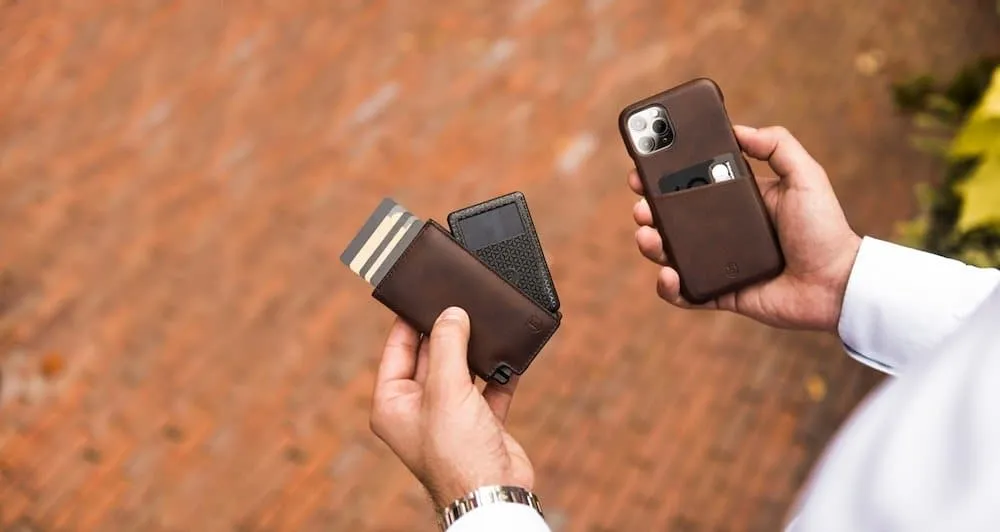
The Parliament wraps an aluminum ejector core in leather, so one button push fans out every card in the main compartment, and you can add a separately sold tracker card to help locate a misplaced wallet from your phone. Ekster now calls the successor the Ekster Wallet, so specs differ between versions. Ekster also sells an all-metal Aluminum Cardholder using the same mechanism without any leather at all. Our full Ekster review breaks down both.
The ejector only handles the cards inside the mechanism. Anything in the leather pockets comes out by hand, so keep your daily cards in the ejector.
Access: Pull-Tab vs. Button Ejector
How you actually get a card out is the real decision here. Bellroy’s pull-tab requires a small tug and a bit of manual sorting once you’re past the first three slots. Ekster’s button exposes the cards for you, fanning the whole ejector stack into a visible cascade. If speed and zero-thought retrieval matter most, Ekster wins clearly. If you’d rather have nothing mechanical, Bellroy’s simplicity is the appeal.
Capacity
Bellroy lists the Note Sleeve for 4–11 cards. With Ekster, distinguish total wallet capacity from the smaller stack that fits in the ejector: embossed cards take up more room, and extra cards go in the leather pockets.
Smart Features
Ekster makes it easy to buy a wallet and tracker together, but tracking isn’t exclusive to its wallets. A slim tracker card can also go in a Bellroy if the pocket has room. If “I lose things” is a real personal pattern, that’s a reason to budget for a tracker with either wallet. Just make sure the tracker works with your phone.
Materials & Aging
The Note Sleeve uses leather to keep the whole wallet flexible, and its appearance changes with pocket wear; the finish and color affect how obvious that patina is. The Parliament’s leather wraps a rigid aluminum core, so it ages differently: the core keeps its shape however the leather wears, while an all-leather Bellroy softens and shapes itself around how you carry it.
FAQ
Which is more durable long-term, Bellroy or Ekster?
Bellroy has the simpler construction: leather creases and softens, but there’s no ejector to maintain. Ekster’s rigid core keeps its shape, while the mechanism adds a potential failure point. Some Ekster owners report broken ejectors or separating leather; another owner describes smooth, reliable card ejection over several years. Choose Bellroy for mechanical simplicity, or Ekster if button access matters more to you.
Can I get Ekster’s tracker feature on a Bellroy wallet?
Yes — Ekster’s own tracker guide describes using a tracker in a regular bifold. A slim tracker card fits in a Bellroy pocket like any other card.
Is the Ekster Parliament as slim as a Bellroy?
Close, but the aluminum ejector core adds a bit of rigidity and thickness a pure-leather Bellroy doesn’t have. If ultimate slimness is the priority over the ejector mechanism, Bellroy’s Card Sleeve and Slim Sleeve are worth considering too.
For the other major mechanical alternative to a traditional leather build, see our Ridge vs. Ekster comparison.