 The Wallet Shoppe
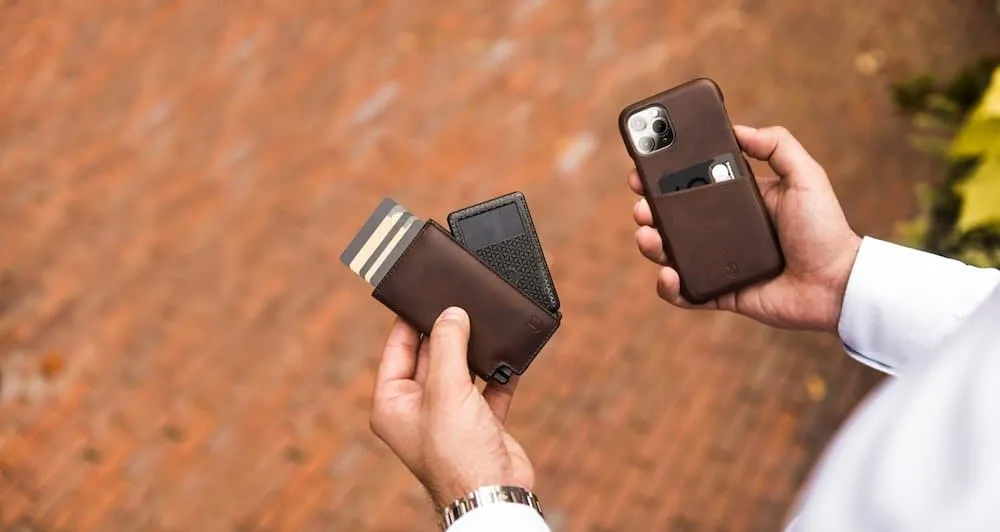
Ekster makes two smart wallets priced the same as each other: the leather Parliament and the all-metal Aluminum Cardholder. Both eject your cards with a button push, both pair with Ekster’s tracker card, both block RFID. The choice between them is about how you want your wallet to look and feel, not what it does.
Background
People have been losing their wallets for as long as they’ve been carrying them in back pockets. Beyond the obvious security risk, it’s a logistics nightmare. Cancelling cards, replacing the driver’s license, working through a week without your stuff.
The Smart Wallet category exists to fix that. A small Bluetooth or GPS card sits inside the wallet and pairs with an app, so a misplaced wallet can call back to you instead of disappearing.
What is a Smart Wallet?
Smart wallets pair with a phone app via a Bluetooth or GPS card, an embedded chip, or, in newer models, Apple’s FindMy network. The card approach is the most flexible. Pull it out, drop it in luggage, track a different thing for a trip.
Founded in 2015 by two friends from Amsterdam plus a Kickstarter veteran, Ekster was one of the pioneers in the smart wallet space. They wanted to fix two problems at once: the bulky-wallet problem (skip the cards-and-receipts pile) and the lost-wallet problem (make the wallet findable). The Parliament and Aluminum Cardholder are their two answers.
If you’re cross-shopping, Bellroy takes a leather-first design approach without the tracker, and the Ridge goes full metal minimalist with no smart features at all.
Parliament — full-grain leather over an aluminum chassis. Holds up to 12 cards in the ejector mechanism plus extra slots in the bifold.
Aluminum Cardholder — all-metal slim wallet. Holds 12 cards via the same push-button ejector. No bifold.
Review of the Ekster Wallets
Both wallets share Ekster’s core mechanism: a push-button ejector that fans your cards out in a stair-step so you can pick the one you want. From there they diverge in material, capacity, and presence in your pocket. Looking at both across four dimensions: Size, Durability, Aesthetics, and Function.
Size
Parliament — 4.4 in × 3.0 in × 0.6 in. Holds the ejector mechanism (up to 12 cards) plus a leather bifold layer with extra card slots and a strap for cash.
Aluminum Cardholder — 4.0 in × 2.4 in × 0.4 in. Pure ejector wallet, no bifold layer. Fits 12 cards in the metal frame and accepts a folded bill via an external strap.
The Aluminum is meaningfully smaller in every dimension. Front-pocket carry with the Aluminum disappears completely. The Parliament adds a few extra millimeters of leather wrap and a bit of bifold thickness. You’ll feel it more in dress slacks, less in jeans.
Bottom line: Aluminum wins on raw slimness. If pocket footprint is the deciding factor, that’s the wallet.
Durability: Parliament
The Parliament’s full-grain leather is European-tanned and wraps around an aluminum core. The leather will scuff, soften, and patina. The aluminum frame won’t.
Durability: Aluminum Cardholder
The Aluminum Cardholder is exactly what it says: aircraft-grade aluminum, end to end. It’s nearly impossible to damage in a way that matters. Edges and corners may pick up minor scuffs after months of pocket time, but structurally it’s bombproof. The trade is no patina, no story over time. A two-year-old Aluminum looks identical to a new one.
Bottom line: Parliament ages, Aluminum doesn’t. Both will outlast the cards you put in them. Pick the one whose end-state you prefer.
Aesthetics
The Parliament reads as a leather wallet with a clever mechanism inside. From the outside, most people can’t tell it’s a smart wallet at all. Six leather colors (Classic Brown, Juniper Green, Merlot, Nappa Black, Roma Cognac, Steel Blue) all show off the brand’s leather work without shouting.
The Aluminum reads as engineering. The brushed metal frame is honest about being a metal wallet, and Ekster offers it in seven finishes from Jet Black to Brushed Steel to Midnight Blue. It’s the wallet that signals “I think about my carry.”
These are two different aesthetic statements at the same price. A Parliament looks at home on a leather desk; an Aluminum looks at home next to your AirPods.
Bottom line: Aesthetics is a judgment call. The honest read is leather for traditional taste, aluminum for modern.
Function
This is where the wallets are most similar.
Ejector Mechanism
Push the small button on the side and your cards fan out in a stair pattern. Pull the one you need, push the rest back. The mechanism is identical on both wallets.
The catch on both: the ejector chamber holds exactly 5 cards in the comfortable zone. Stuff 4 in and the ejector won’t push them out cleanly because there’s slack. Stuff 6 in and you’re overstuffing the spring. If you carry 4, fill the slot with a gift card or transit card. If you carry 7+, the bifold layer on the Parliament gives you 3-7 extra slots; the Aluminum doesn’t.
Cash Storage
Both wallets handle cash via an external silicone strap that wraps the wallet. Fold a few bills, slip them under the strap, done. Nobody who carries cash daily loves this system. It works for the occasional bill or business card.
The Parliament also has bifold pockets, so cash can sit folded inside the leather instead of strapped to the outside. That’s a real convenience advantage if you’re ever carrying more than two or three bills.
Bottom line: Same mechanism, but the Parliament adds bifold storage that the Aluminum lacks.
Leather vs Aluminum
This is the actual decision the article is about, so it’s worth being direct.
Get the Parliament if: you carry more than 5 cards regularly, you like leather wallets, you carry cash often enough that the bifold matters, or you want a wallet that develops character over years.
Get the Aluminum Cardholder if: you want the slimmest possible front-pocket wallet, you carry 5 or fewer cards, you almost never carry cash, or you’d rather your wallet match your phone aesthetic than your shoes.
Same price, same warranty, same tracker compatibility, same ejector. The only meaningful differences are the bifold layer and the surface material.
Where’s My Wallet? Ekster’s Tracker Card
Tracking is what makes either of these a “smart” wallet, and it’s a separate purchase. The Tracker Card is a credit-card-shaped tracker that slips into a slot on either wallet.
This is a cable-recharged card, not the solar-charged original we reviewed here at launch — topping it up is something you have to remember rather than something that happened in your pocket. Connect it to Ekster’s app or Apple’s FindMy network and your wallet shows up on your phone like an AirTag.
The recent FindMy integration is the real upgrade since the original 2021 review of these wallets. Every nearby iPhone passively helps locate the card, instead of needing the network to be other Ekster customers. That’s a meaningful difference in the wallet’s chance of coming back to you. You can also link the card to Siri or Google for the standard “Hey, where’s my wallet” voice trigger, and set a proximity alert so your phone warns you when you walk away from the wallet.
The card is water-resistant, not waterproof. Rain is fine; pools are not.
Bonus Video
FAQ
Is the Ekster Senate still available?
The Senate has been discontinued. The current Ekster lineup is the leather Parliament, the Aluminum Cardholder, and the slimmer Aluminum Cardholder Pro. The Senate’s slim-cardholder concept lives on in the Aluminum Cardholder.
Where are Ekster wallets made?
Materials are sourced in the USA and Europe; assembly is in China. Ekster is headquartered in the Netherlands.
Do Ekster wallets break easily?
The ejector mechanism is the part most prone to failure if you’re rough with it. We didn’t see issues in normal carry, but if you cram seven cards into a five-card slot daily, the spring will eventually wear.
Do Ekster wallets need to be charged?
The wallets themselves don’t. The optional Tracker Card does — it recharges over a cable. The original solar version ran differently, so if you owned one of those, this is a change you’ll notice.
Can Ekster wallets get wet?
The Tracker Card is water-resistant, not waterproof. The wallets themselves handle weather fine; just don’t drop them in a pool.
How long does an Ekster wallet last?
The wallets are well-made and should hold up for several years of daily carry.
Cross-shopping the ejector-mechanism category? See how Ekster stacks up directly against Ridge and Bellroy.
Post cover image provided by Ekster Press Kit.