 The Wallet Shoppe
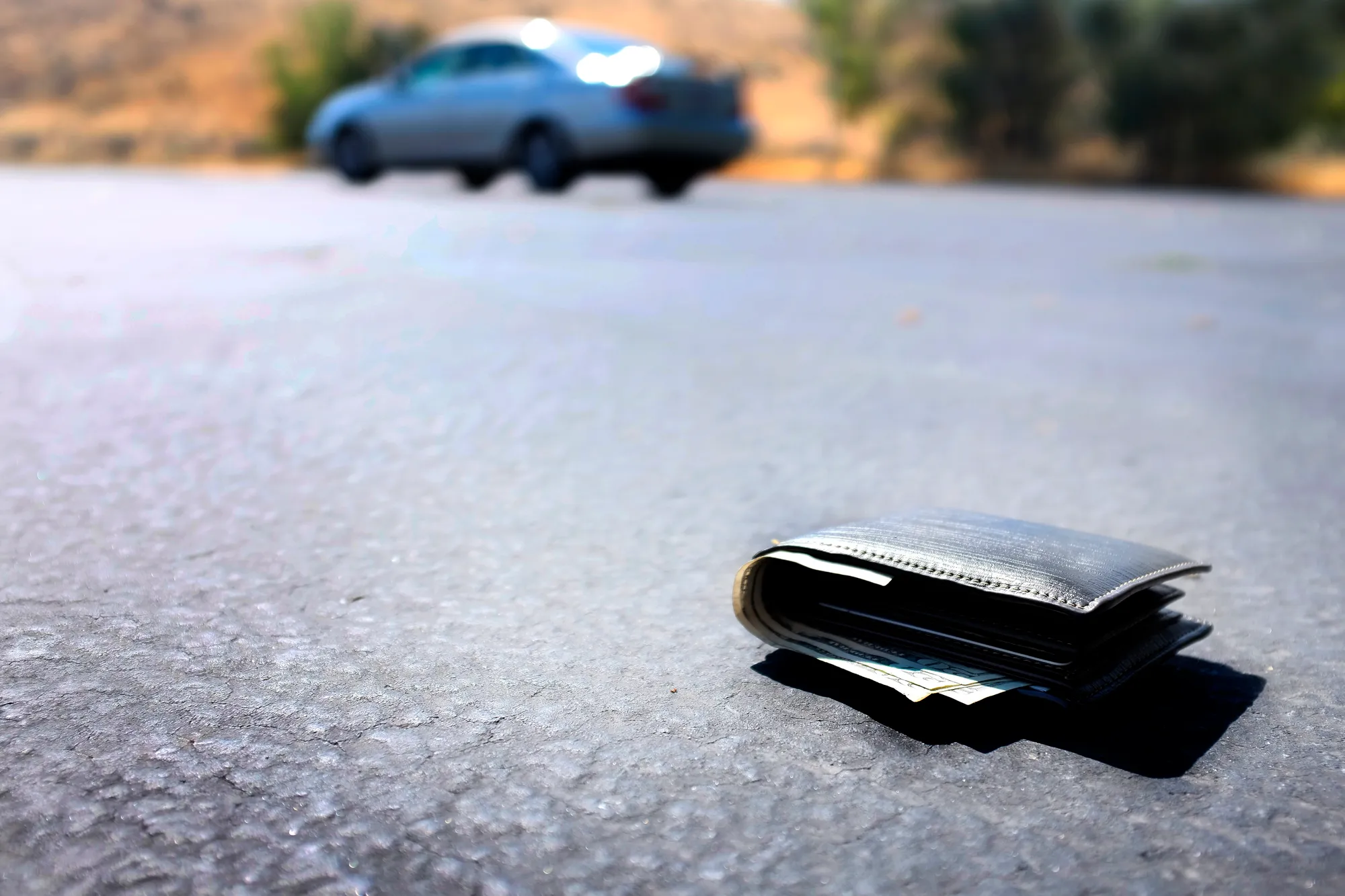
Tired of losing your wallet? Want to know who makes the best wallet tracker so you can easily find it next time?
We’ll compare four credit card-sized trackers — Ekster, Chipolo, Tile, and Ridge’s new Tracker Card — and tell you which is worth buying.
Along the way, we’ll get into how a trackable wallet actually works.
Wallet Trackers - Quick Summary
For those that just want the quick and dirty - these are the wallet trackers we’ll be discussing:
For those that want more details, please read on!
How Does a Wallet Tracker Work?
Before we can talk about which tracker is best, let’s start by talking about how these gadgets work in the first place.
Pretty much every trackable wallet works in essentially the same way. The wallet manufacturer partners with a technology company that makes a GPS tracking device that is the right size and weight to slip into a wallet.
These are usually separate devices, not built into the wallet itself. The tracker is paired with an app on your phone that allows you to find your wallet on a map.
There is one main downside to this approach - namely that if someone steals your wallet, they can simply remove the tracker. We don’t think this is such a big deal. We suspect most thieves are likely to take the cash and credit cards and dispose of the wallet anyway, disposing of the credit cards as well as soon as they get locked down by your bank.
The upside of a separate unit is that you can upgrade without buying a whole new wallet: when a new tracker version adds a feature worth having, you just swap the old card for the new one.
How Does a Wallet Tracker Share Its Location?
We knew what bluetooth tracking was, but we had to dig a bit to understand crowd-tracking. The gist of it: millions of people are using these products to track their goods, and together they form a network that helps everyone find their stuff.
Bluetooth tracking works if you’re within 100 feet or so of the product. Once you leave or lose your wallet and are more than the “Bluetooth distance” away from it, the crowd-tracking kicks in.
All of these devices work with a phone app where you can see exactly where your wallet was last “seen” by the network, but if someone else who has tracker software installed on their phone walks by your device, it will securely (and privately) send you an update as to the exact location of your tracker. (The biggest network is Apple’s “Find My” network, which is installed on every new iPhone.)
The person who sent it will never even know it, they’re just doing a good deed by being a part of the network. (also - people won’t steal your stuff). We created this diagram below to illustrate:
Why Do Trackers Use a Cellphone’s GPS?
You might be wondering why wallet trackers piggy-back off other people’s phones instead of simply having their own transmitters. There are two main reasons: weight and power. A transmitter capable of using cellphone towers directly would basically be a cellphone in its own right. That would require a much bigger and heavier device, that would need more power. Most of these trackers have batteries that go for a year or more - a more powerful transmitter would drain the battery MUCH faster.
Other Features of Trackable Wallets
The features just keep on coming. Most of these trackers have an alarm or beeper of some kind. This can work in two ways:
-
When you are somewhere near your wallet, you can use the app to make the tracker start beeping to help you find exactly where it is
-
Many of these gadgets can make your phone start beeping a warning if you get too far away from your wallet so you don’t leave it behind, or even press a button on the tracker if you have your wallet but can’t find your phone!
You can even link these cards with voice assistants so you can ask Siri, Alexa, Google, “Where’s my wallet?”
The Main Players in Trackable Wallets
Four trackers worth knowing about: Ekster, Chipolo, Tile, and Ridge’s Tracker Card. All four are credit card-sized and slot into a wallet. The key differences come down to network (Apple FindMy vs Android-compatible), battery (replaceable or rechargeable), and whether you’re already committed to a specific wallet brand.
Ekster Card
Ekster’s listing now calls this the Tracker Card again — the same cable-recharged card it briefly sold as the Finder Card, itself a replacement for the original solar-charged card of the same name
We consider the Ekster to be the OG of the trackable wallet world (technically Tile released their tracker earlier, but not in a wallet-friendly form). We liked the wallet range so much we wrote a full Ekster wallet review.
Ekster partnered with Chipolo (see below) to build their custom, white-labeled tracker card. Designed to fit their Parliament or Senate ejector wallets, this slim, splash-resistant card can also act as a bluetooth shutter for your phone camera. It recharges over a cable — the original solar version is long discontinued, and losing the top-up-in-your-pocket trick is a genuine downgrade.
| Dimensions | 0.15 x 2 x 3.5 in (0.3 x 5 x 8.5 cm) |
| Credit Card Compatible? | Yes |
| Devices | Apple/Android |
| Lost and Found Network | Apple FindMy + Chipolo Users |
| Battery | Rechargeable (USB cable) |
| Range | 200 ft (60 m) |
| Water Resistant? | Yes |
Although this is designed to slot into the Ekster wallets, there is nothing stopping you putting this credit card sized tracker in any other wallet of your choice — that flexibility is half of why we still rank it first.
The other half is network coverage. It rides both Apple’s FindMy network and Chipolo’s own, which is what makes it the only card tracker here that works properly on Android. The solar charging that used to be its headline feature is gone, so it now needs a cable like most of the field.
Chipolo CARD
Chipolo was launched out of a Kickstarter back in 2013. The company is headquartered in Slovenia and has received funding from TechStars amongst others. They make a variety of tracker products in addition to their partnership with Ekster, including tags that can be hooked onto clothing, luggage, etc.
Initially, Chipolo worked by creating their own network of devices. Every phone with the Chipolo app installed to track the owner’s belongings could be co-opted to help locate other tags owned by people in the community. The later Chipolo devices have been designed to take advantage of Apple’s own “Find My” network, which vastly increases the number of devices that will help you find your stuff.
The one we’re most interested in is the Chipolo Card. This comes in two flavors, one of which uses Apple’s tech, the other uses Chipolo’s network and should be your choice if you use Android. This is very similar to the Ekster (not a big surprise there) but the battery choice is different, with a single use non-replaceable battery with a one-year lifespan (they have a program you can sign up for that lets you replace the card at half price.)
All in all, a great option from a company that’s been building trackers since its 2013 Kickstarter launch.
| Dimensions | 0.08 x 1.45 x 2.67 inches (2.15 x 37 x 68 mm) |
| Credit Card Compatible? | Yes |
| Devices | Apple/Android |
| Lost and Found Network | Apple FindMy + Chipolo Users |
| Battery | 1 year, non-replaceable |
| Range | 200 ft (60 m) |
| Water Resistant? | Yes |
Tile Slim
Tile were one of the first “find my stuff” companies, releasing their first sticky Tile gadgets in 2014. Friends of ours introduced me to them with a tile stuck to the top of their pet tortoise …
They’ve created multiple variations since then. In addition to their stick-on tiles, they now have Tile trackers designed as key fobs, and of course, one for slipping into a credit card slot in a wallet, the Tile Slim.
At first glance, there is not a lot to choose between this wallet tracker and the Ekster or Chipolo options.The battery cannot be replaced, but the Tile has the longest battery life of all of these, up to three full years. The Tile has its own Lost and Found network instead of using the Apple “Find My” network, which means you’re limited to other people who also use the Tile gadgets. This is certainly more limiting, though these are a very popular make so there are a LOT of users (over 35 million sold - source here.)
In 2021, Tile was acquired by Life360. This probably gives the company much deeper pockets to develop with, so it will be interesting to see how they take the product forward in the face of massively increased competition.
| Dimensions | 0.1 x 2.13 x 3.37 inches (2.5 x 54 x 85.5 mm) |
| Credit Card Compatible? | Yes |
| Devices | Apple/Android |
| Lost and Found Network | Tile App Users |
| Battery | 3 year, non-replaceable |
| Range | 250 ft (76 m) |
| Water Resistant? | Yes |
Ridge Tracker Card
Ridge launched their own tracker card in 2024, and if you carry a Ridge Wallet it’s the obvious pick. Unlike every other card tracker here, it’s designed to sit under the cash strap or money clip rather than in a card slot — which makes sense, since your card slots are occupied by cards.
The specs are solid: 300ft range, 95dB ringer, IPX67 waterproofing, Apple FindMy network with Siri support, and a 155mAh battery that charges wirelessly via any Qi or MagSafe pad. Five months per charge. You can buy it directly from Ridge or on Amazon.
The honest caveats: it’s Apple-only (no Android support at all), and Ridge note in their own product copy that the 300ft range “may vary” inside a Ridge Wallet — the aluminum or titanium frame eats signal. Expect noticeably shorter range than the open-air spec. Both it and the Ekster need periodic recharging now, so that is no longer a point of difference.
If you don’t own a Ridge, there’s no reason to choose this over the Ekster.
| Dimensions | Credit card size (85.6 x 54 x ~2mm) |
| Credit Card Compatible? | Yes |
| Devices | Apple only |
| Lost and Found Network | Apple FindMy |
| Battery | 5 months, wireless rechargeable (Qi/MagSafe) |
| Range | 300 ft (90 m) open air |
| Water Resistant? | Yes (IPX67) |
Choosing a GPS Tracker For Your Wallet
For most people, the Ekster is still the pick — but for its network rather than its battery. It works on both Apple and Android via FindMy and Chipolo’s own network, and it fits any wallet. If you’re Android-only, it’s the only card tracker here that works at all. Note that the solar charging it was known for is gone; the current card recharges over a cable.
If you carry a Ridge, get the Ridge Tracker Card. It’s built for the ecosystem and it’s the right shape, and you can buy it directly from Ridge. More on whether the Ridge Wallet is worth it in the full Ridge review.
A note on AirTag. We’ve left the AirTag out of the main comparison because it isn’t credit-card sized — it’s a small puck, thicker than any of the options above, and won’t sit flat in a card slot. That said, it’s Apple’s own hardware with a replaceable CR2032 battery, wide FindMy network coverage, and the 2nd-generation model has meaningfully better precision finding range than the original.
If you want the AirTag specifically, Axwell make a dedicated AirTag Money Clip that attaches it cleanly to their wallets, and they have a full AirTag wallet collection worth a look. We cover the best wallet options designed around AirTag in our best AirTag wallets guide. For most people though, one of the four card trackers above is a cleaner solution.
Our pick for most readers: