 The Wallet Shoppe
Minimalist wallets built around a rigid card case solve the “how do I get my cards out” problem two ways: a spring-loaded ejector that pops cards up with a button push, or a plain plate you thumb-slide the cards out of. Neither is objectively better — the ejector is faster but has a moving part, the plate has nothing to break but takes a second longer.
The Ejector: Pop-Up Carbon Fiber Wallet
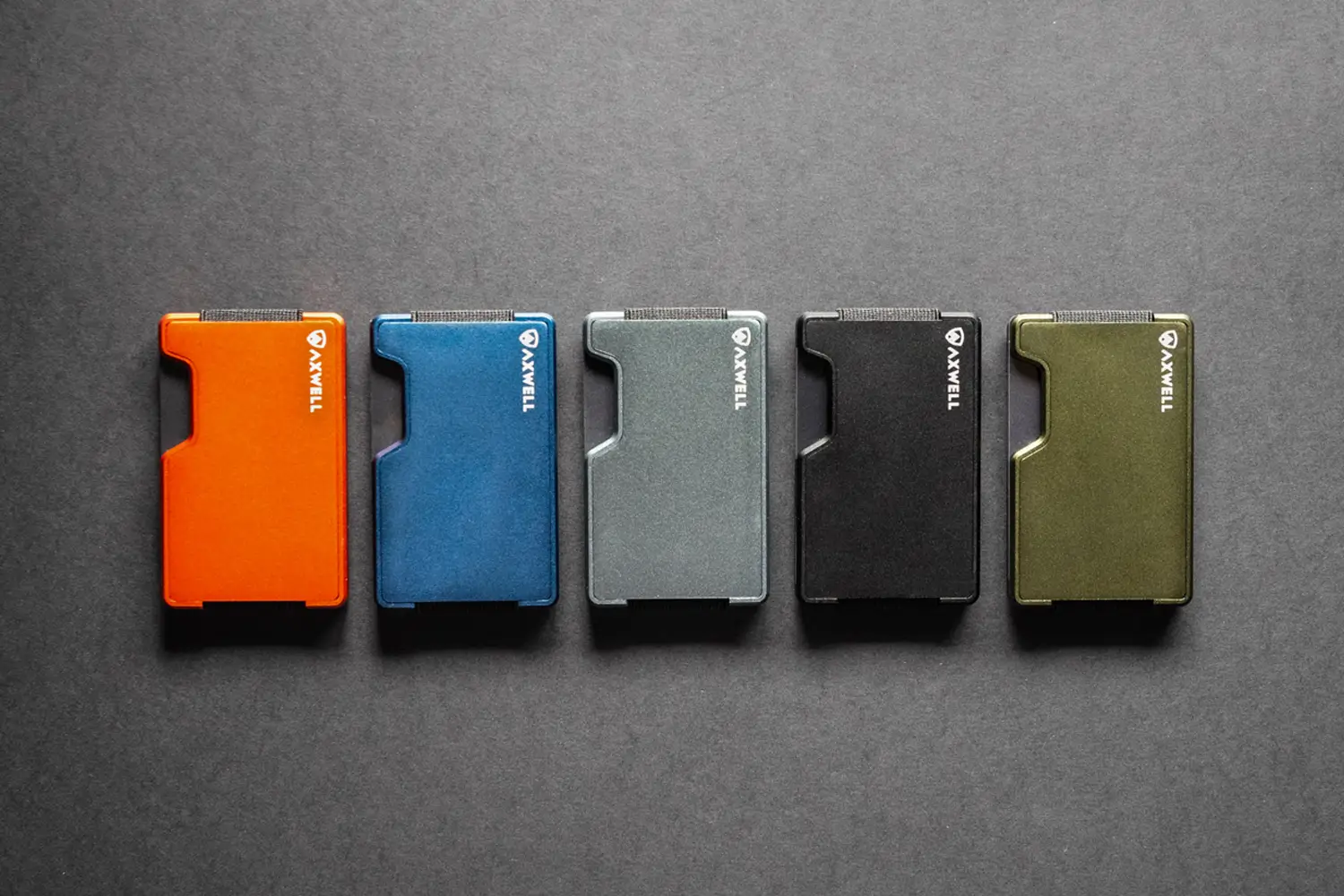
This is the classic minimalist-wallet mechanic: press the button, cards fan up into your fingers. The metal case takes the impact of daily pocket wear better than leather, and the carbon fiber finish keeps it light. An ID window on the front means you’re not digging for your license.
The trigger is the part that will eventually wear — this is true of every ejector wallet, not just this one. It’s not a spring-loaded action here, so dexterity issues or cold hands can make it feel slightly stiff compared to premium ejector wallets that cost several times as much.
The Plate: Bare Carbon Fiber Card Holder
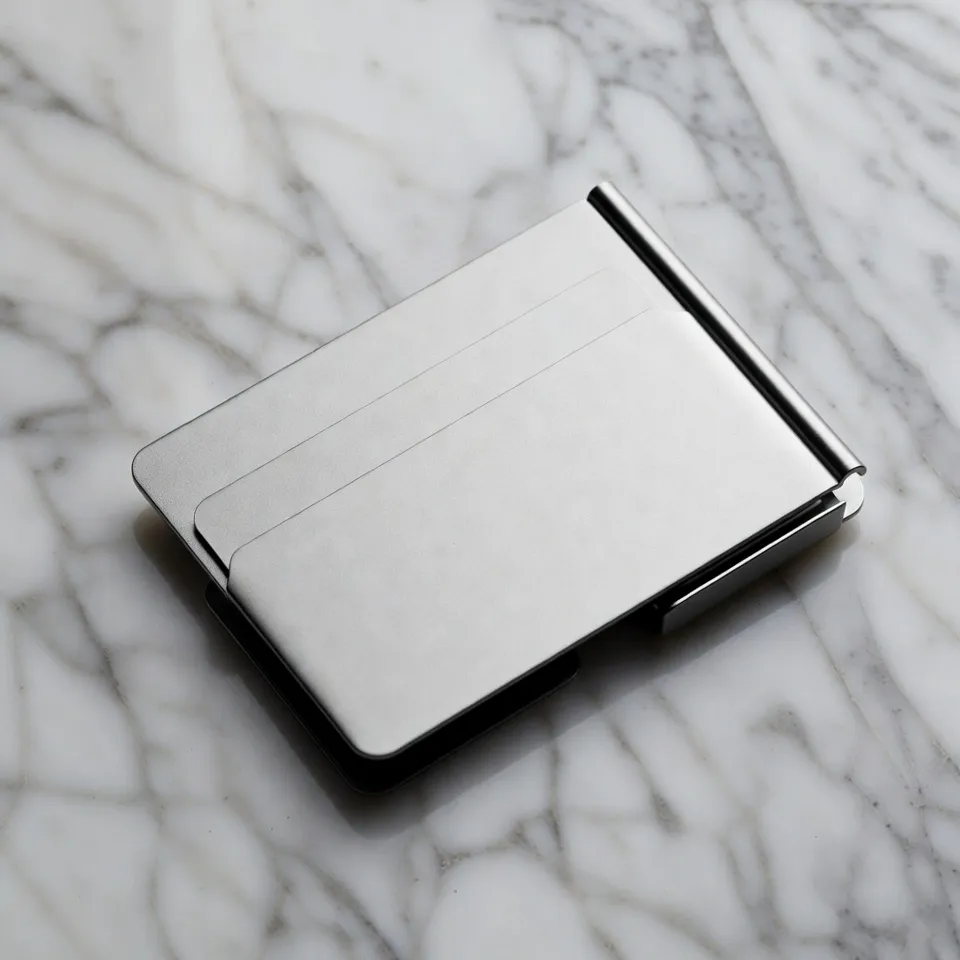
No trigger, no spring, no moving parts to eventually fail — just a rigid carbon fiber shell you slide cards in and out of with your thumb. That simplicity is the whole appeal: there’s nothing here that can break except the wallet itself, and 3K carbon fiber is tough enough that’s unlikely too.
The tradeoff is access speed. Thumb-sliding a card out takes a beat longer than a button push, and if you overload it past its rated capacity, cards start binding rather than sliding smoothly.
Durability
Both designs hold up well structurally — carbon fiber and cased aluminum are both meaningfully tougher than the leather or fabric wallets they’re competing with. The ejector wallet’s weak point is mechanical: the trigger is the one part with moving pieces, and moving pieces are what eventually wear out on any wallet, at any price point. The plate wallet’s only failure mode is cracking the carbon fiber itself, which takes real abuse — dropping it isn’t usually enough, sitting on it wrong repeatedly might be.
Card Access
The pop-up ejector is genuinely faster once you’re used to it — press, cards fan out, grab the one you want. The plate wallet requires a thumb-slide that’s simple but not instant. If you value speed and don’t mind a mechanism, take the ejector. If you’d rather have zero parts that can wear out, the plate wins.
RFID Blocking
Both options block RFID scanning on the cards stored inside, which matters if you carry older magnetic-stripe or contactless-chip cards that are vulnerable to skimming. Modern chip cards with EMV are largely immune to this kind of scanning already, so treat RFID blocking as a nice-to-have rather than a deciding factor either way.
Are These Worth It?
Both wallets are slim, light, and priced well below what premium brands like Ridge or Ekster charge for a similar core mechanism. If you want to try minimalist carry without committing to a higher price point, either is a reasonable way in — the ejector if you want speed, the plate if you want the simplest thing that can’t break.